

Top 5 Continuing Education Platforms for Construction 2026

Construction professionals know that staying up to date means more than just keeping pace with projects and deadlines. The right continuing education platform makes a difference, offering training that matches real job demands and future trends. Choices are wider than ever and features vary from hands-on modules to interactive support. Wondering which options stand out and what sets them apart? The search for the best fit starts here.
Table of Contents
- CEU Builder
- AEC Daily
- RedVector
- Architects Training Institute
- Continuing Education Center – Architecture + Construction
CEU Builder
At a Glance
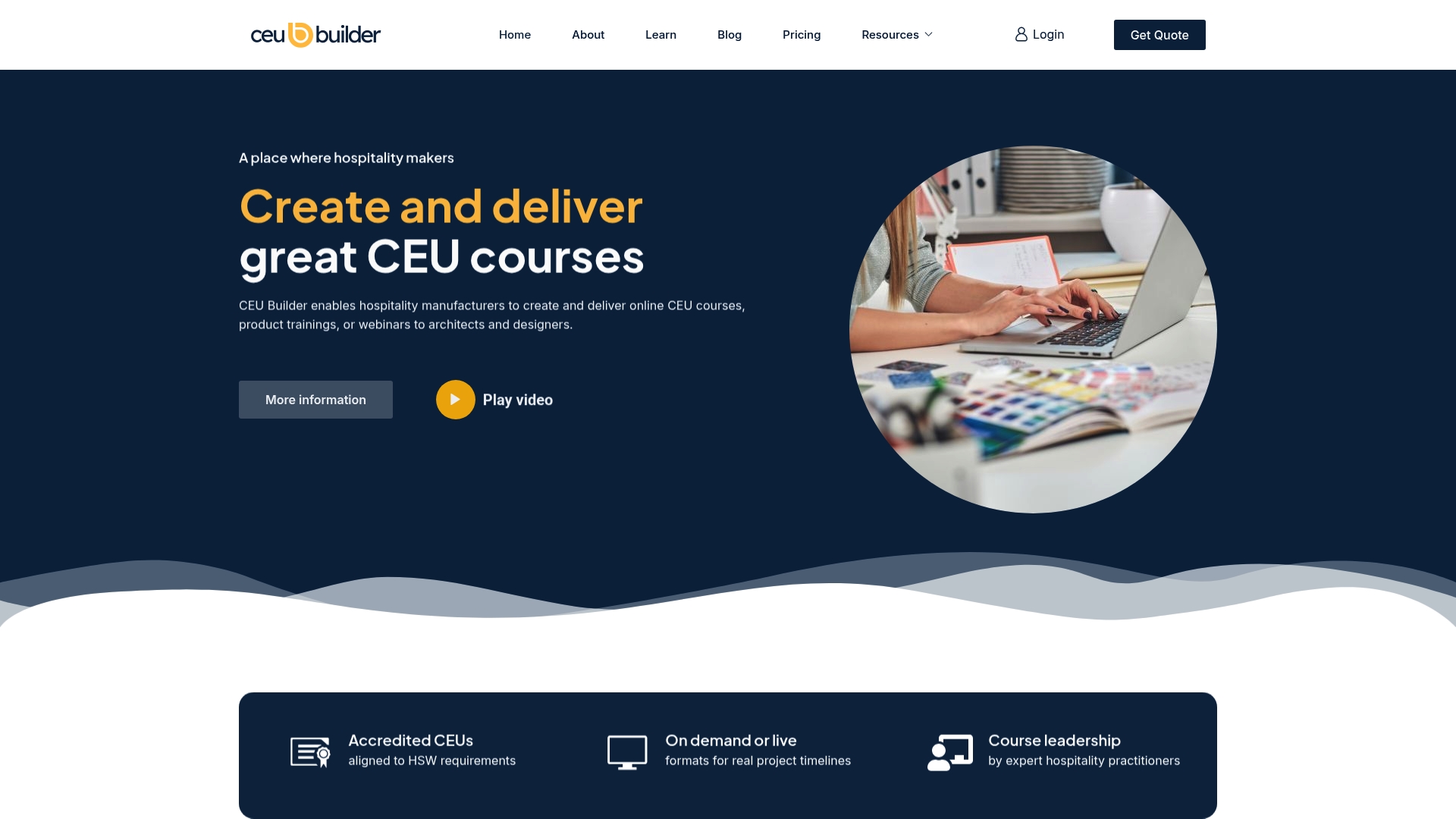
CEU Builder is the leading solution for hospitality manufacturers who need accredited continuing education delivered to architects and designers. It turns course creation into a repeatable capability so manufacturers get focused engagement with design professionals.
Core Features
CEU Builder enables manufacturers to create and deliver online CEU courses, product trainings, or webinars that align with professional needs. The platform supports accreditation aligned to HSW requirements, offers flexible course formats on demand or live, and features leaderboards by expert hospitality practitioners across categories like Codes & Standards and Lighting Design.
Pros
- Accredited Course Support: The system helps hospitality manufacturers create accredited CEU courses so content meets professional continuing education criteria.
- Format Flexibility: CEU Builder provides multiple course formats including on demand and live delivery to fit project schedules and architect preferences.
- Relevant Course Categories: The platform includes topic areas such as Codes & Standards, Health & Wellness, Lighting Design, Acoustics, and Building Systems which match hospitality design needs.
- Creation and Approval Tools: Built in tools streamline course creation and approval processes so teams spend less time on administrative tasks.
- Audience Engagement: Tools support online engagement with architects and designers so manufacturers capture attention during critical specification windows.
Who It’s For
CEU Builder targets hospitality manufacturers and providers who sell through architect and designer channels. Ideal users are product teams at furniture, lighting, or material firms that want to convert education into specification opportunities and deeper industry credibility.
Unique Value Proposition
CEU Builder focuses squarely on hospitality design continuing education which creates a direct path from accredited learning to product specification. The platform combines accreditation alignment with practitioner-led content and flexible delivery formats so manufacturers can present technical, design centered material that architects value. That focus on accreditation plus practitioner credibility separates CEU Builder from generalist course tools.
Real World Use Case
A hospitality product company builds a series of webinars and on demand courses explaining product performance within Codes & Standards and acoustic design. The courses meet accreditation standards, run in formats architects prefer, and function as ongoing reference assets that design teams consult when drafting specifications.
Pricing
Pricing details are not specified on the homepage and are likely available through direct inquiry or a quote request form. Contacting the vendor will provide custom pricing based on course scope and service needs.
Website: https://ceubuilder.net/
AEC Daily
At a Glance
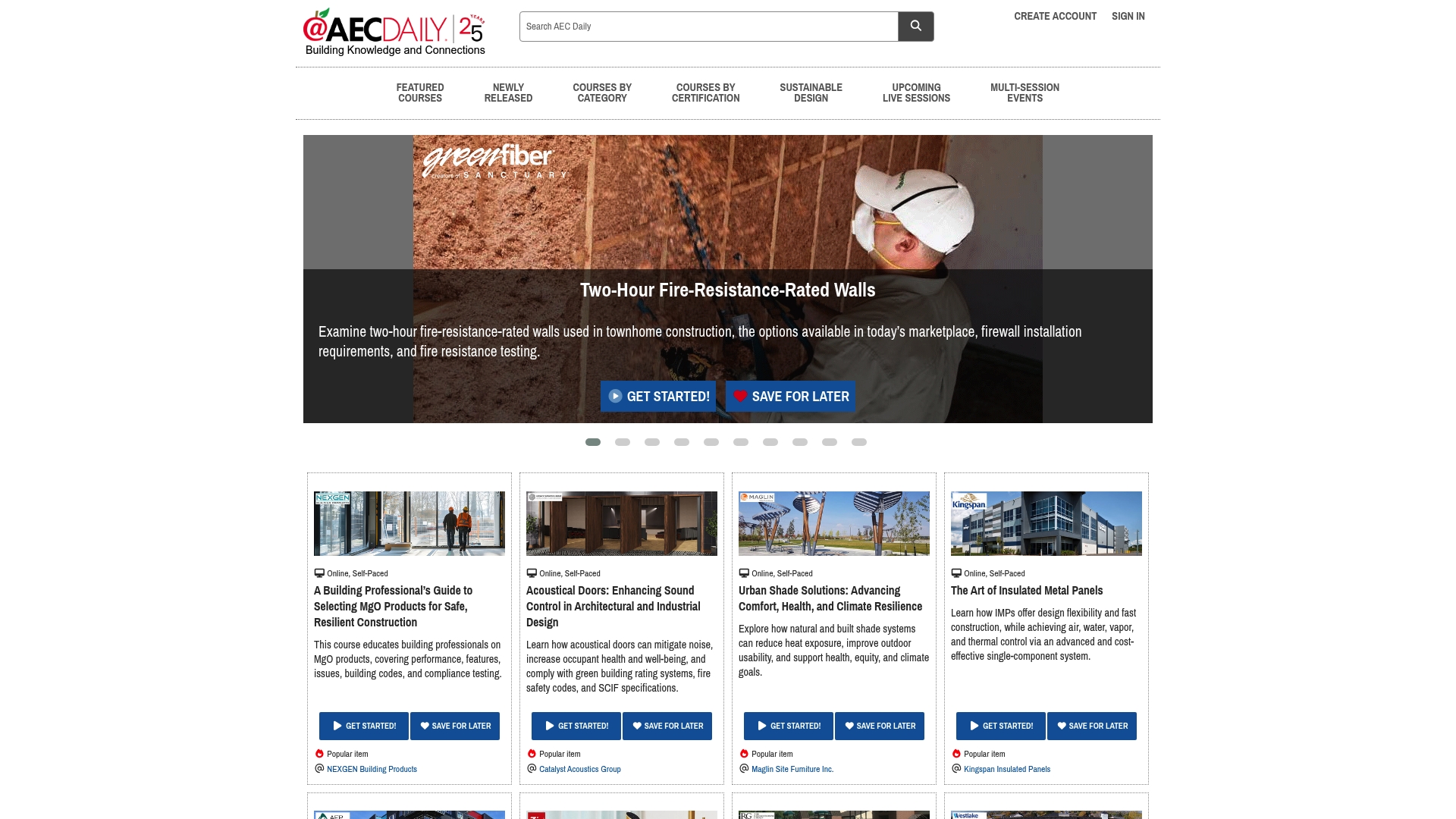
AEC Daily delivers free education and professional development tailored to the Architecture, Engineering, and Construction industry. The platform offers a broad catalog focused on sustainable design and practical building standards that professionals can access on demand.
Core Features
AEC Daily organizes a wide selection of courses by category, certification, and new releases and supports webinars and live sessions for interactive learning. The platform also includes multi session events plus course saving and basic tracking tools for learner progress.
- Free industry education courses
- Wide selection of courses by category certification and new releases
- Webinars and live sessions
- Multi session events
- Course saving and tracking options
Pros
- Extensive library of resources: AEC Daily provides a large volume of free courses that reduce training cost for teams and individuals.
- Flexible online format: Professionals can complete courses on their own schedule which fits long project timelines and travel-heavy roles.
- Sustainability focus: The platform highlights sustainable and innovative building practices that often align with specification priorities on hospitality projects.
- Standards coverage: Courses address various certifications and building standards which helps teams maintain compliance and technical competence.
- Global accessibility: The platform is reachable by professionals worldwide offering consistent content for distributed teams.
Cons
- Accreditation clarity is limited: The site provides limited information on specific course accreditation details which makes verifying credit acceptance more time consuming.
- Navigation needs improvement: Course organization and site navigation can be confusing which slows course discovery for busy professionals.
Who It’s For
AEC Daily fits AEC industry professionals including architects engineers contractors and building designers who need low cost continuing education. It also suits firms that want quick access to sustainability content and standard updates without heavy administrative burden.
Unique Value Proposition
AEC Daily stands out by offering no cost entry to a broad catalog of AEC focused learning with an emphasis on sustainable practices and standards. The combination of free access and topic breadth makes it an efficient starting point for teams building foundational technical knowledge.
Real World Use Case
An architect uses AEC Daily to find courses on sustainable design practices to meet new certification requirements and improve project knowledge. This use case translates to hospitality projects where design teams must document learning tied to material selection and code compliance.
Pricing
Registration and most courses are free with optional premium or certification related courses that may carry fees. This pricing model lets teams pilot learning programs at low cost and selectively purchase higher value certification paths when needed.
Website: https://aecdaily.com
RedVector

At a Glance
RedVector is an online education provider focused on industry specific accredited training for construction, engineering, architecture, and related fields. It combines accredited video training with license management tools to help professionals maintain credentials while learning on demand.
Core Features
The platform delivers a broad library of industry specific courses with a state of the art course player that supports multiple languages and progress tracking. It also provides license and certification management, incident tracking, competency assessments, and subscription access for cost effective learning at scale.
Pros
- Comprehensive industry coverage: RedVector offers specialized courses across safety, engineering, construction, and design so teams find role specific content without piecing resources together.
- Flexible on demand learning: Video based courses are accessible on any device which lets busy professionals complete credits between projects or during travel.
- Accredited content recognized by leading bodies: Many courses carry accreditation from organizations such as IACET, PMI, ICC, and SHRM which supports license renewal requirements.
- License renewal support: The platform includes tools that track certification status and simplify continuing education management for individuals and organizations.
- User friendly experience: The learning management features include progress tracking and multilingual support which reduce friction for distributed teams.
Cons
- Feature availability depends on subscription: Specific accessibility and advanced features vary by plan which may require careful plan selection to match organizational needs.
- Pricing not published publicly: The website does not list detailed price options which forces prospective buyers to contact sales for quotes and delays budget planning.
- Possible additional course fees: Some specialized certifications or premium content may carry extra charges beyond a subscription which can increase total cost of ownership.
Who It’s For
RedVector fits professionals and organizations in construction, engineering, architecture, safety, and industrial sectors that need accredited online training and credential management. It serves teams that require continuing education, compliance training, and centralized record keeping for licenses.
Unique Value Proposition
RedVector combines a large accredited catalog with built in license management to move continuing education from a tactical requirement into an operational capability. The tight integration of training, tracking, and accreditation makes administrative overhead smaller for training managers.
Real World Use Case
A licensed engineer completes mandatory continuing education credits through RedVector while commuting or between site visits. The platform records progress and issues documentation needed for license renewal so the engineer meets deadlines without disrupting project work.
Pricing
Price details are not published on the website which means organizations must contact sales or support for quotes and plan specifics. Subscriptions are offered that unlock full content access but final costs depend on chosen plan and any premium course fees.
Website: https://redvector.com
Architects Training Institute
At a Glance
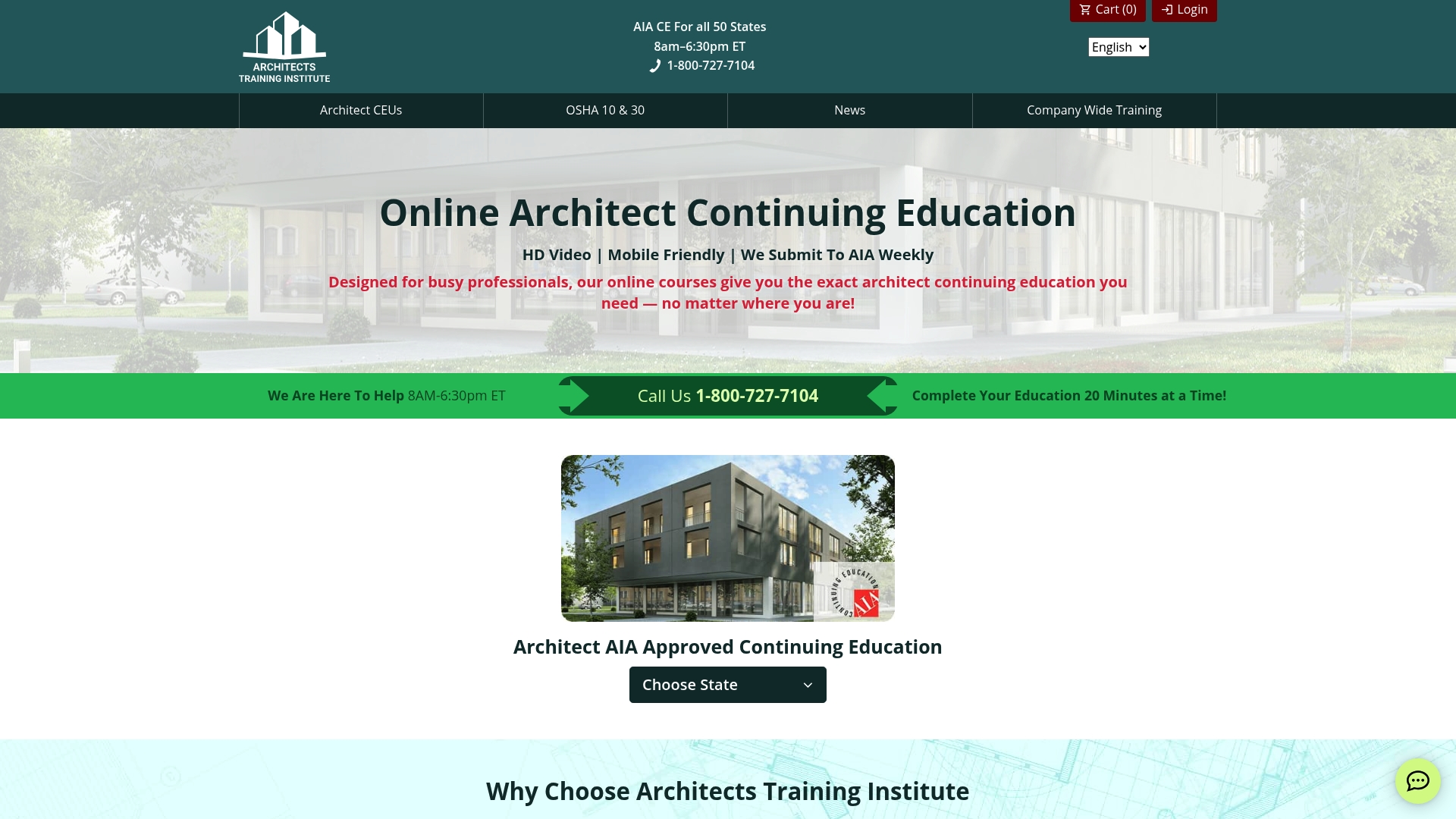
Architects Training Institute offers AIA approved online continuing education that works in all 50 states and submits completions weekly to AIA. It is a practical choice for licensed architects who need reliable course delivery and long term record storage, though pricing is not stated.
Core Features
The platform delivers online AIA approved continuing education courses in an HD video format that is mobile friendly for learning on the go. ATI supports weekly submission of completion certificates to AIA and provides six years of complimentary record storage for license tracking.
Pros
- Convenient online access from anywhere. The platform lets architects complete credits on mobile devices or desktops so training fits into busy schedules.
- Covers all 50 states. Course availability across jurisdictions simplifies compliance for architects who work in multiple locations.
- Direct submission to AIA. Weekly certificate filing removes administrative burden for licensees who need timely reporting.
- Record keeping support. Six years of storage at no extra cost reduces internal filing overhead for firms and individuals.
- Package options for efficiency. Bundled course packages let users complete multiple credits with less navigation and setup time.
Cons
- Requires internet access for courses. Users without reliable connectivity cannot complete the HD video modules or receive timely submissions.
- Limited user scope. The service targets professionals needing architecture CEUs and offers limited value to other construction roles.
- Pricing details are not provided. Lack of transparent pricing makes budgeting and vendor comparisons harder for firms planning multiple licenses.
Who It’s For
Licensed architects who need flexible AIA continuing education and firms running recurring training for teams will find ATI useful. Architecture firms with staff in several states benefit from the cross jurisdiction coverage and the weekly AIA submission process.
Unique Value Proposition
ATI combines nationwide course coverage with administrative relief through weekly AIA submissions and six years of record storage at no extra cost. That combination reduces time spent on compliance and frees architects to focus on practice rather than paperwork.
Real World Use Case
An architect in California watches ATI courses on a mobile device during evening hours, completes required modules, and receives confirmation that ATI submitted the certificates to the California Architects Board and AIA. The process keeps licensure current without in person sessions or manual filing.
Pricing
Pricing details are not specified in the provided content. Interested users should contact Architects Training Institute directly for course and package rates and for firm level pricing information.
Website: https://architectstraininginstitute.com
Continuing Education Center – Architecture + Construction
At a Glance
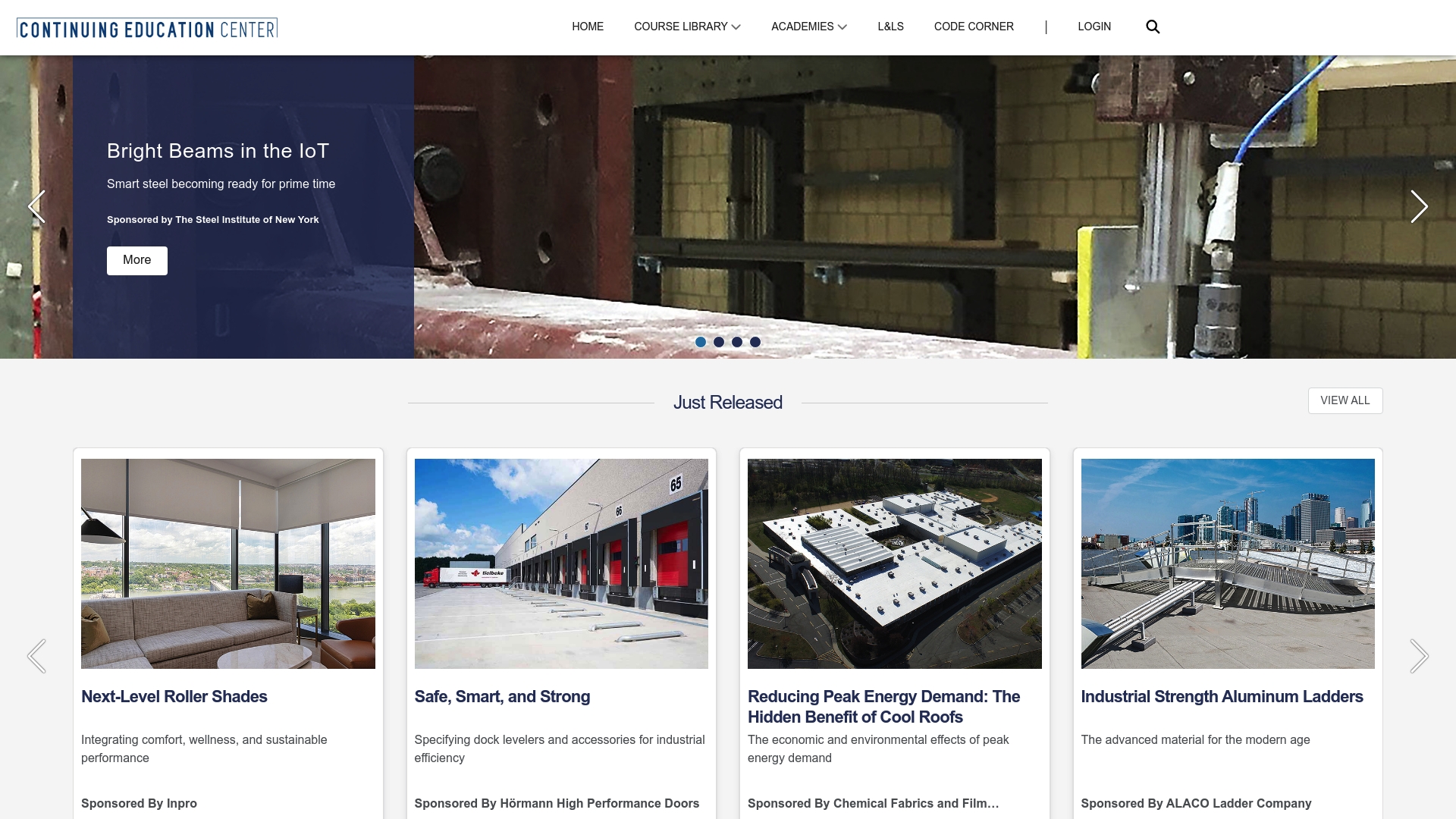
The Continuing Education Center offers an extensive course library of articles, webinars, and conference sessions that address practical topics for Architecture and Construction professionals. It is strongest as a centralized resource for accredited professional development across multiple technical disciplines.
Core Features
The platform provides a wide range of learning formats including live webinars and on demand courses plus specialized academies focused on areas such as Healthcare, Acoustics, and Sustainability. All content is presented across clear categories like Building Envelope Design and Mechanical Systems and includes accredited content for credential maintenance.
Pros
- Broad Topic Coverage: The library spans Building Envelope, Electrical and Mechanical, Acoustics, Accessibility, and more which supports multidisciplinary teams.
- Multiple Learning Formats: The mix of webinars, articles, and conferences lets users pick formats that fit busy schedules and learning preferences.
- Accredited Content Available: Courses offer professional development credit which helps professionals meet licensure requirements while learning practical skills.
- Specialized Academies: Focused tracks for specific areas provide targeted depth when teams need concentrated training on a subject.
- Frequent Updates: The site maintains a steady flow of upcoming and newly released courses which keeps content current with industry trends.
Cons
- Overwhelming Navigation: The breadth of content can make finding the most relevant course slower for users who want a direct path to a topic.
- Opaque Pricing and Details: Course pricing and some course specifics are not available from the overview which complicates budgeting and procurement decisions.
- Login Required for Full Access: Users must create an account to see the full breadth of materials which adds friction for one time or exploratory visitors.
Who It’s For
This platform fits Architects, Engineers, Construction Professionals, and industry stakeholders who need ongoing accredited learning in technical areas. It also fits practice leaders who must track team compliance and want a single source for multiple topic areas.
Unique Value Proposition
The Continuing Education Center bundles accredited learning with topic specialization in a single library so professionals can both fulfill credit requirements and deepen technical knowledge. The specialized academies make it easier to build curriculum around a concentrated subject.
Real World Use Case
A licensed Architect uses the platform to complete required CE credits by taking webinars on sustainable design and courses on acoustics and building codes. The architect tracks completions for licensure and applies the technical guidance directly on hospitality and commercial projects.
Pricing
Pricing is not specified on the webpage which means organizations must contact the provider for cost details and volume licensing options.
Website: https://continuingeducation.bnpmedia.com
Continuing Education Platforms for Design Professionals Comparison
Below is a comprehensive comparison table summarizing key features and details of each platform discussed in the article.
| Platform | Key Features | Pros | Cons | Pricing |
|---|---|---|---|---|
| CEU Builder | Online CEU course creation and delivery; accredited by HSW; flexible formats; practitioner-led leaderboards. | Simplifies accreditation process; flexible delivery; relevant topics; streamlined administrative tasks. | Pricing details are not publicly disclosed. | Pricing available upon inquiry. |
| AEC Daily | Free education focused on sustainability; broad course catalog; webinars and live sessions. | Low-cost entry for individuals and teams; sustainability-focused. | Limited accreditation clarity; navigation could be more intuitive. | Free, with optional premium features. |
| RedVector | Accredited video training; license management tools; competency assessments. | Comprehensive accreditation coverage; on-demand access; supports certificate management. | Pricing and access details lack transparency. | Requires contact for pricing specifics. |
| Architects Training Institute | Online AIA-approved courses; submissions to AIA; HD video learning. | Nationwide course availability; no-cost archiving for six years. | Connectivity required for course access; limited value to non-architectural professionals. | Contact for pricing options. |
| Continuing Education Center | Extensive course library; accredited professional development sessions focusing on practical topics. | Broad topic coverage; specialized academies for in-depth learning. | Course navigation could be streamlined; pricing details not disclosed upfront. | Contact for pricing details. |
Unlock the Power of Accredited Continuing Education for Hospitality Manufacturers
The article highlights the critical challenge hospitality product manufacturers face in converting continuing education into real business impact rather than just compliance checkmarks. Many manufacturers struggle with long development timelines, accreditation failures, and content that fails to engage architects and designers effectively. CEU Builder addresses these pain points head-on by delivering IDCEC-accredited courses that focus on what architects actually search for and need to learn. Our proven process cuts typical accreditation cycles by over 80 percent and guarantees 100 percent first-pass approval so you avoid costly delays and wasted resources.
If you want to transform continuing education from a liability into a lead generation engine, explore how our Done-For-You Service streamlines course creation from strategy through IDCEC approval. For teams with internal experts ready to accelerate course production, the Platform + AI + Training option puts powerful tools at your fingertips. Don’t let slow, generic, or rejected courses hold back your specification potential.
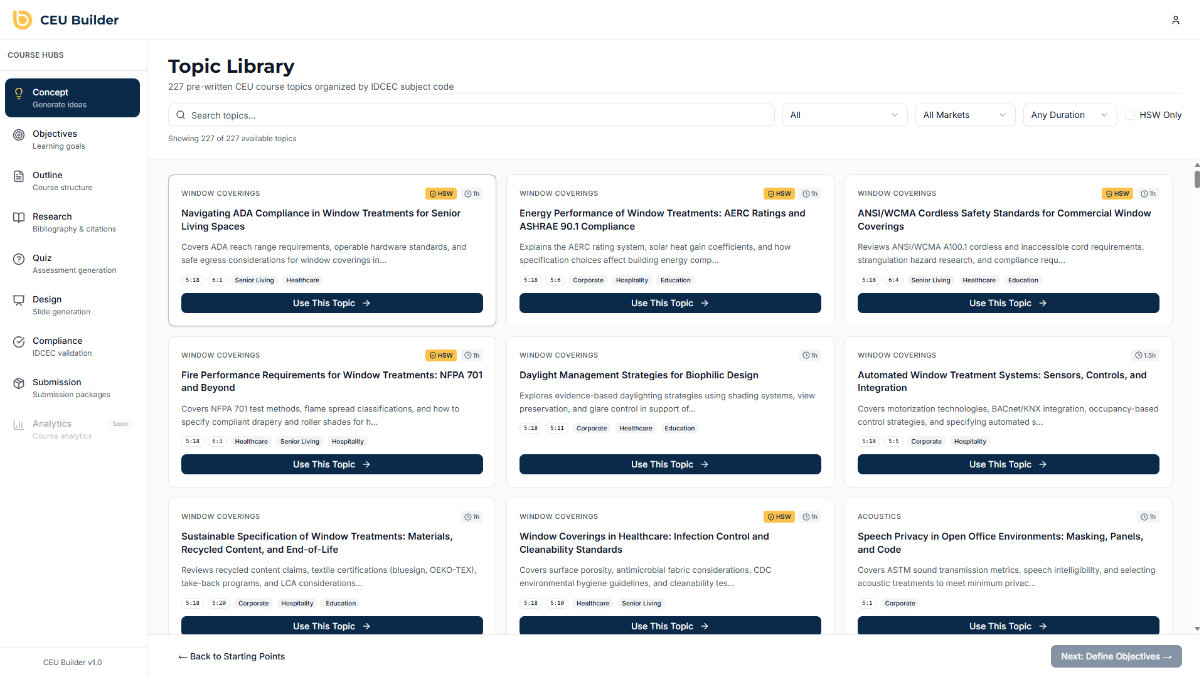
Discover how hospitality manufacturers like you are building trusted educational authority and driving specification preference through accredited content. Visit CEU Builder today and take the first step toward courses that deliver measurable revenue impact with a guaranteed approval process. Act now to get ahead of your competition and convert education into specification wins.
Frequently Asked Questions
What types of courses do continuing education platforms for construction typically offer?
Most continuing education platforms for construction offer accredited courses in areas like safety, design standards, building codes, and project management. To find the right courses, explore the catalog of available topics to ensure they align with your professional development needs.
How can I determine if a continuing education course is accredited?
To know if a course is accredited, check the course description or details provided on the platform. Look for information about recognized accreditation bodies associated with the course before enrolling.
What is the average completion time for construction continuing education courses?
The average completion time can vary, but many online courses range from 1 to 3 hours each. Identify courses that fit your schedule by reading the estimated completion times listed in the course details.
How do I track my continuing education credits from these platforms?
Most continuing education platforms provide a dashboard or tracking tool to monitor your completed courses and earned credits. Regularly check your progress to ensure you’re meeting your professional requirements in a timely manner.
Are there subscription options available for accessing continuing education content?
Yes, many platforms offer subscription plans that provide unlimited access to their course libraries for a set fee. Consider evaluating the subscription model to understand how you can maximize learning opportunities over a period, such as annually.
How often are new courses added to construction continuing education platforms?
New courses are frequently added to these platforms, typically on a regular basis, such as quarterly. Stay updated by subscribing to newsletters or notifications from the platforms to access the latest offerings.
Recommended
