

Content Accreditation: Ensuring CEU Quality and Impact
Finding ways to stand out with architects can feel like a constant challenge for marketing teams in North American hospitality furniture manufacturing. With architects actively seeking legitimate professional development, understanding the rigorous quality assurance process of content accreditation for CEUs has never been more vital. This article clarifies what truly matters in continuing education accreditation, explains governing bodies such as IACET, and outlines actionable steps to create courses architects trust and licensing boards respect.
Table of Contents
- Defining Content Accreditation for CEUs
- Types of Accreditation and Governing Bodies
- Core Process: From Creation to Approval
- Key Requirements and Common Pitfalls
- Business Impact, Risks, and Alternatives
Key Takeaways
| Point | Details |
|---|---|
| Importance of Accreditation | Accreditation ensures continuing education programs meet established quality standards essential for professional development. |
| Types of Accreditation | There are three primary types: Institutional, Programmatic, and Continuing Education, each with distinct focus areas and oversight bodies. |
| Core Accreditation Process | Course development involves initial design, alignment with standards, thorough documentation, and external review for approval. |
| Business Impact of Accreditation | Accreditation boosts credibility, attracts learners, and differentiates organizations in competitive markets, but comes with administrative challenges and risks. |
Defining Content Accreditation for CEUs
Content accreditation represents a rigorous quality assurance process designed to validate and elevate continuing education programs across professional industries. At its core, accreditation ensures that educational offerings meet established standards set by recognized authorities in professional development.
The primary objective of content accreditation involves evaluating educational design standards to guarantee that learning experiences deliver meaningful, high-quality content. This process helps professionals maintain licensure requirements and ensures consistent educational quality across different training providers.
Key components of content accreditation typically include:
- Comprehensive review of instructional design
- Assessment of learning objectives and outcomes
- Verification of instructor qualifications
- Evaluation of content relevance and accuracy
- Compliance with professional development standards
Professional organizations like the International Accreditors for Continuing Education and Training (IACET) play a critical role in establishing these benchmarks. Rigorous accreditation standards demonstrate an organization’s commitment to continuous improvement and educational excellence.
Pro tip: Always verify an accreditation provider’s reputation and recognition within your specific professional industry before investing time and resources in their continuing education programs.
Types of Accreditation and Governing Bodies
Continuing education accreditation encompasses multiple layers of oversight, with various organizations responsible for maintaining educational quality and professional standards. Accreditation involves non-governmental organizations as well as federal and state agencies that ensure institutions meet prescribed standards of effectiveness and quality.
The primary types of accreditation can be categorized into three distinct domains:
- Institutional Accreditation: Evaluates entire educational organizations
- Programmatic Accreditation: Focuses on specific academic or professional programs
- Continuing Education Accreditation: Validates ongoing professional development offerings
Within the continuing education landscape, specialized accrediting bodies play critical roles in different professional sectors. The International Accreditors for Continuing Education and Training (IACET) serves as a global standard-setter, while profession-specific organizations like medical boards, legal associations, and educational councils maintain unique accreditation requirements for their respective industries.
Each accrediting body maintains distinct criteria, with some focusing on broad educational quality and others concentrating on highly specialized professional competencies. Professional regulatory bodies typically establish specific requirements for continuing education credits, ensuring that practitioners remain current with evolving industry standards and best practices.
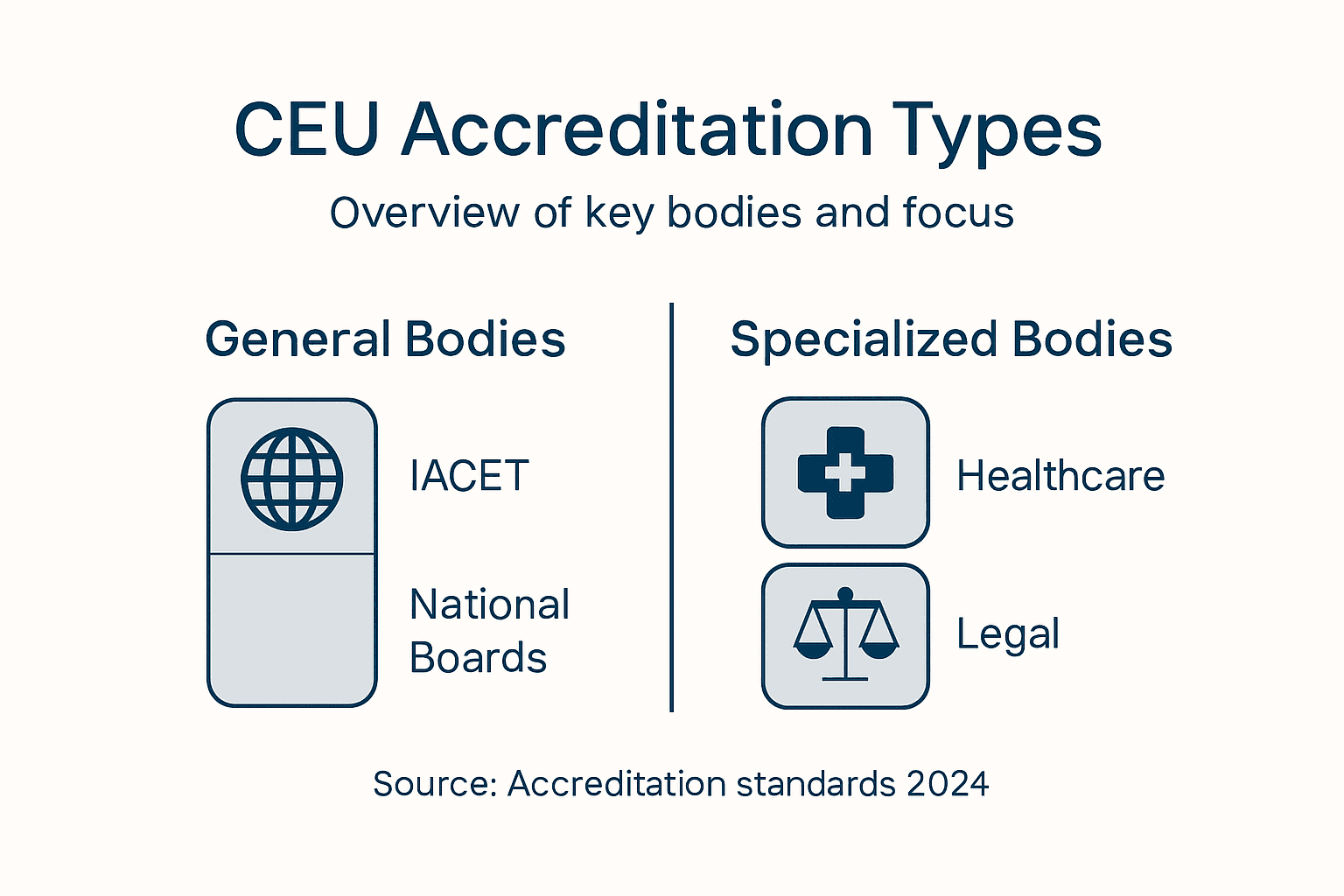
Here’s a quick overview of accreditation types and their distinct focus areas:
| Accreditation Type | Focus Area | Oversight Example |
|---|---|---|
| Institutional Accreditation | Entire organization quality | Regional accrediting bodies |
| Programmatic Accreditation | Specific professional programs | Medical, legal boards |
| Continuing Education Accreditation | Ongoing professional development | IACET, industry councils |
Pro tip: Research the specific accreditation requirements in your professional field to ensure your continuing education credits will be recognized and valued by licensing boards and professional associations.
Core Process: From Creation to Approval
The journey of creating a continuing education course requires meticulous planning and strategic execution. Providers must carefully develop training that meets rigorous educational standards while addressing specific professional development needs.
The core accreditation process typically involves several critical stages:
- Initial Course Design: Developing comprehensive educational content
- Instructional Alignment: Ensuring learning objectives match professional standards
- Documentation Preparation: Compiling required submission materials
- External Review: Submitting for professional accreditation assessment
- Feedback Incorporation: Addressing and implementing review recommendations
Successful course development requires a systematic approach that begins with understanding the specific requirements of accrediting organizations. Professional accrediting bodies like IACET establish comprehensive criteria that evaluate not just the content, but also the educational design, administrative processes, and overall delivery methodology.
Professional organizations demand rigorous documentation that demonstrates the course’s educational value. This includes detailed learning objectives, comprehensive instructor qualifications, precise assessment mechanisms, and clear alignment with industry-specific competency standards. Providers must anticipate potential review challenges and proactively address them during the initial course development phase.
Pro tip: Create a comprehensive compliance checklist before course submission to dramatically reduce the likelihood of initial accreditation rejection.
Key Requirements and Common Pitfalls
Navigating the complex landscape of continuing education accreditation requires a deep understanding of critical regulatory requirements. Professional providers must meet stringent standards that go far beyond simple content creation, encompassing comprehensive documentation, instructor qualifications, and participant engagement strategies.
The most critical requirements for successful CEU accreditation include:
- Instructor Qualifications: Demonstrating subject matter expertise
- Content Relevance: Ensuring current, industry-aligned educational material
- Learning Objectives: Developing clear, measurable educational outcomes
- Documentation Integrity: Maintaining comprehensive submission records
- Participant Verification: Implementing robust engagement tracking
Common accreditation pitfalls frequently stem from inadequate preparation and overlooked administrative details. Providers often underestimate the complexity of the review process, failing to align their educational programs with specific accreditor standards or neglecting crucial documentation requirements.

Successful CEU providers recognize that accreditation is an ongoing process of quality assurance. This means continuously updating course content, maintaining rigorous instructor vetting processes, and developing sophisticated tracking mechanisms that demonstrate genuine educational value and participant learning outcomes.
Pro tip: Create a comprehensive compliance checklist that includes detailed instructor credentials, precise learning hour calculations, and explicit alignment with accreditation standards to minimize potential review challenges.
Business Impact, Risks, and Alternatives
Continuing education accreditation represents a critical strategic decision with significant implications for organizational credibility and professional development. Accreditation directly enhances program marketability by establishing trust and providing recognized educational credentials that professionals actively seek.
The potential business impacts can be categorized into several key dimensions:
- Credibility Enhancement: Demonstrating commitment to quality education
- Market Differentiation: Standing out among competing training providers
- Professional Compliance: Meeting industry-specific licensing requirements
- Learner Attraction: Drawing high-quality participants seeking verified credentials
- Institutional Reputation: Building long-term organizational trust
Continuing education programs face complex risks when navigating accreditation processes. These risks include substantial resource investments, potential delays in program launch, and the ongoing administrative burden of maintaining compliance with evolving regulatory standards.
Organizations have several alternatives to traditional accreditation, including developing internal certification programs, partnering with professional associations for credit recognition, and creating informal training modules. However, these alternatives often lack the comprehensive validation and professional credibility that formal accreditation provides.
The following table summarizes common risks of CEU accreditation and possible alternative strategies:
| Risk of Accreditation | Alternative Approach | Potential Limitation |
|---|---|---|
| High administrative burden | Internal certification | Less industry recognition |
| Resource investment | Partnership with associations | Credibility may vary |
| Delays in program launch | Informal training modules | No formal CEU credit |
Pro tip: Conduct a comprehensive cost-benefit analysis that compares the long-term value of accreditation against alternative professional development strategies, considering both direct expenses and potential market positioning advantages.
Elevate Your Continuing Education with Proven CEU Accreditation Expertise
The article highlights the challenges organizations face navigating the complex process of content accreditation to ensure CEU quality and impact. Key pain points include meeting rigorous instructor qualifications, aligning educational objectives with professional standards, and avoiding common pitfalls that delay accreditation. If your goal is to deliver accredited CE content that drives real business value rather than just ticking compliance boxes, mastering these demands is critical.
CEU Builder specializes in transforming continuing education development into a precise, efficient process that guarantees first-pass approval. Our deep understanding of accreditation requirements and strategic content design means you can avoid costly delays and underperforming courses. Discover how to turn your CE programs into powerful demand generators by exploring our insights in Compliance & Accreditation – CEU Builder and learn best practices from our CEU Strategy & Best Practices – CEU Builder. For data-driven results that connect course completions to specification impact, visit Data & Analytics in CEUs – CEU Builder or start directly at CEU Builder.
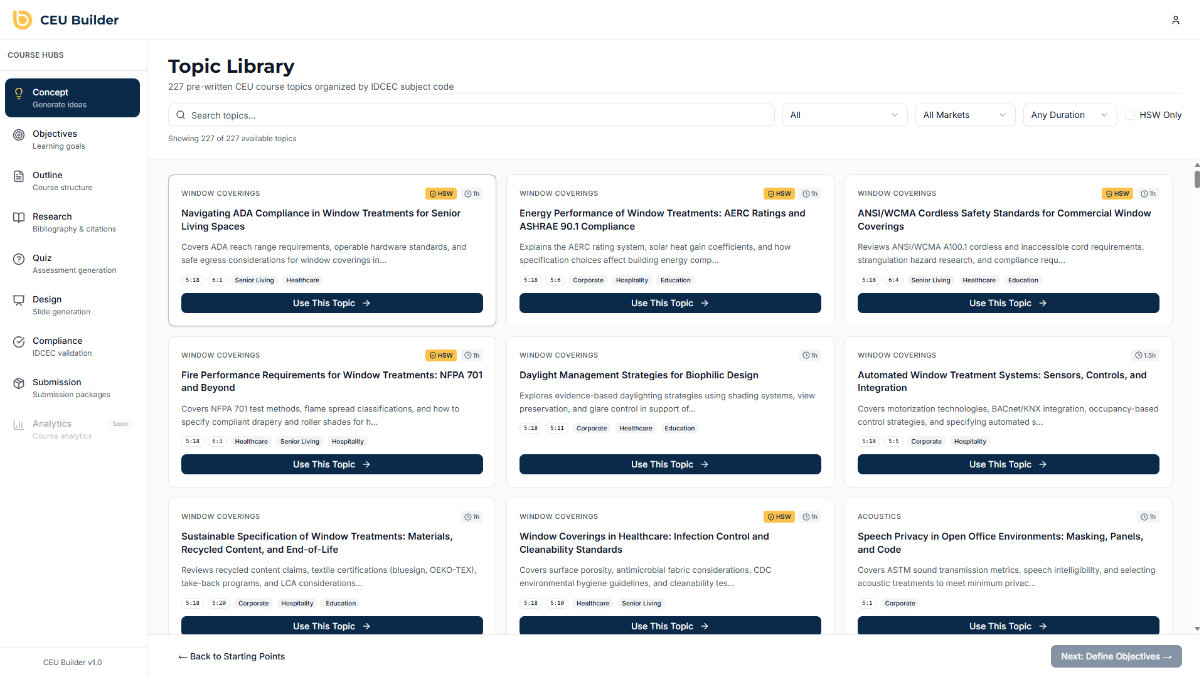
Ready to overcome the accreditation challenge and create CE content that truly influences your market? Act now to partner with CEU Builder and gain the confidence of a 100% first-pass approval rate. Visit https://ceubuilder.net/ to learn how our proven processes and expert solutions can accelerate your path to recognized, impactful CE courses.
Frequently Asked Questions
What is content accreditation for continuing education?
Content accreditation is a quality assurance process that validates continuing education programs to ensure they meet established standards set by recognized authorities, enhancing the overall educational quality.
Why is accreditation important for continuing education providers?
Accreditation is crucial as it demonstrates an organization’s commitment to quality education, ensuring that programs deliver meaningful content that meets professional standards and helps professionals maintain licensure requirements.
What are the key components evaluated during the accreditation process?
The key components typically include a comprehensive review of instructional design, assessment of learning objectives and outcomes, verification of instructor qualifications, evaluation of content relevance, and compliance with professional development standards.
What common pitfalls do providers face during the accreditation process?
Common pitfalls include inadequate preparation, failure to align educational programs with specific accreditor standards, neglecting documentation requirements, and underestimating the complexity of the review process.
Recommended
