

CEU Approval Process: Ensuring Fast, Reliable Accreditation
Securing the attention of architects often hinges on more than standout design or quality materials. For hospitality furniture manufacturers across North America, the CEU approval process has become a strategic gateway to deeper engagement and increased product specification. With industry boards such as the International Design Continuing Education Council setting rigorous standards, an efficient approach to CEU accreditation not only strengthens industry credibility but also paves the way for lasting professional partnerships.
Table of Contents
- Defining The CEU Approval Process And Its Purpose
- Understanding IDCEC Requirements And Eligibility Criteria
- Submission Workflow: Key Steps And Documentation
- Common Pitfalls And How To Avoid Rejection
- Compliance, Fees, And First-Pass Approval Strategies
Key Takeaways
| Point | Details |
|---|---|
| CEUs Standardize Professional Development | Continuing Education Units are essential for tracking skill advancement and meeting licensing requirements across various industries. |
| IDCEC Requirements Ensure Quality | Programs seeking IDCEC approval must focus on non-proprietary, health-related content and demonstrate professional development effectiveness. |
| Thorough Documentation is Crucial | A comprehensive and precise submission can significantly enhance approval chances and avoid rejections due to common pitfalls. |
| Financial Understanding is Key | Recognizing associated fees and compliance requirements is vital for professionals aiming to streamline the CEU approval process. |
Defining the CEU Approval Process and Its Purpose
Continuing Education Units (CEUs) represent a standardized measurement of professional development and learning across multiple industries. These units serve as critical documentation for professionals maintaining their credentials, tracking skill advancement, and meeting ongoing licensing requirements. Continuing education standards ensure professionals remain current in rapidly evolving professional landscapes.
The CEU approval process involves multiple critical components designed to validate educational experiences and maintain high-quality learning standards:
- Quantifiable Learning Measurement: Standardizes educational participation
- Professional Development Tracking: Documents ongoing skills enhancement
- Regulatory Compliance: Supports licensure and credential maintenance requirements
- Quality Control: Ensures educational programs meet rigorous professional standards
Professional organizations and accreditation bodies like the International Accreditors for Continuing Education and Training carefully evaluate educational programs to determine their eligibility for CEU credits. These evaluations typically examine multiple factors, including:
- Instructor qualifications
- Learning objectives and outcomes
- Educational content depth and relevance
- Assessment and verification mechanisms
- Alignment with current industry standards
The fundamental purpose of the CEU approval process extends beyond simple credit tracking. It represents a comprehensive system designed to validate professional learning, maintain industry competence, and support ongoing skill development across diverse professional sectors.
Here’s a quick comparison of the main accreditation bodies and their CEU approval standards:
| Accrediting Body | Industry Focus | Unique Approval Standard | Provider Challenge |
|---|---|---|---|
| IACET | Multiple | Rigorous instructional design | Comprehensive evidence required |
| IDCEC | Interior design | 75% content must protect public welfare | Strict HSW documentation |
| AAPC | Healthcare | Emphasis on non-promotional CE | Frequent revision demands |
| State Licensing Boards | Varies | Industry- and region-specific rules | Documentation varies widely |
The CEU approval process ensures educational experiences meet rigorous standards that support professional growth and regulatory compliance.
Pro tip: Always verify the specific CEU requirements for your professional licensing board, as standards can vary significantly between different industries and regions.
Understanding IDCEC Requirements and Eligibility Criteria
The International Design Continuing Education Council (IDCEC) establishes rigorous standards for professional development education, ensuring that continuing education units (CEUs) maintain high-quality learning experiences. IDCEC’s provider requirements are designed to protect the integrity of professional education across design disciplines.
To qualify for IDCEC approval, educational programs must meet several critical criteria:
- Non-Proprietary Content: Courses cannot be direct product advertisements
- Professional Development Focus: Learning objectives must advance professional skills
- Health and Safety Standards: At least 75% of content must relate to protecting public welfare
- Qualified Instruction: Presenters must demonstrate professional expertise
- Comprehensive Documentation: Detailed course materials and learning assessments required
The council’s Health, Safety, and Welfare (HSW) credit requirements are particularly stringent. Professional designers must ensure their educational experiences meet these comprehensive standards:
- Minimum 75% content relevance to public protection
- Clear, measurable learning objectives
- Verifiable instructor credentials
- Structured assessment mechanisms
- Proper course documentation
Eligibility for IDCEC approval extends beyond simple content creation. Providers must demonstrate a commitment to genuine professional development, creating educational experiences that meaningfully advance industry knowledge and practices.
IDCEC requirements transform continuing education from a compliance exercise into a genuine opportunity for professional growth and learning.
Pro tip: Carefully review all IDCEC submission guidelines before developing your course to maximize first-pass approval chances and avoid costly revisions.
Submission Workflow: Key Steps and Documentation
Successfully navigating the CEU approval process requires a strategic and systematic approach to course documentation and submission. Professional providers must meticulously prepare comprehensive materials that demonstrate the educational value and compliance of their continuing education offerings.
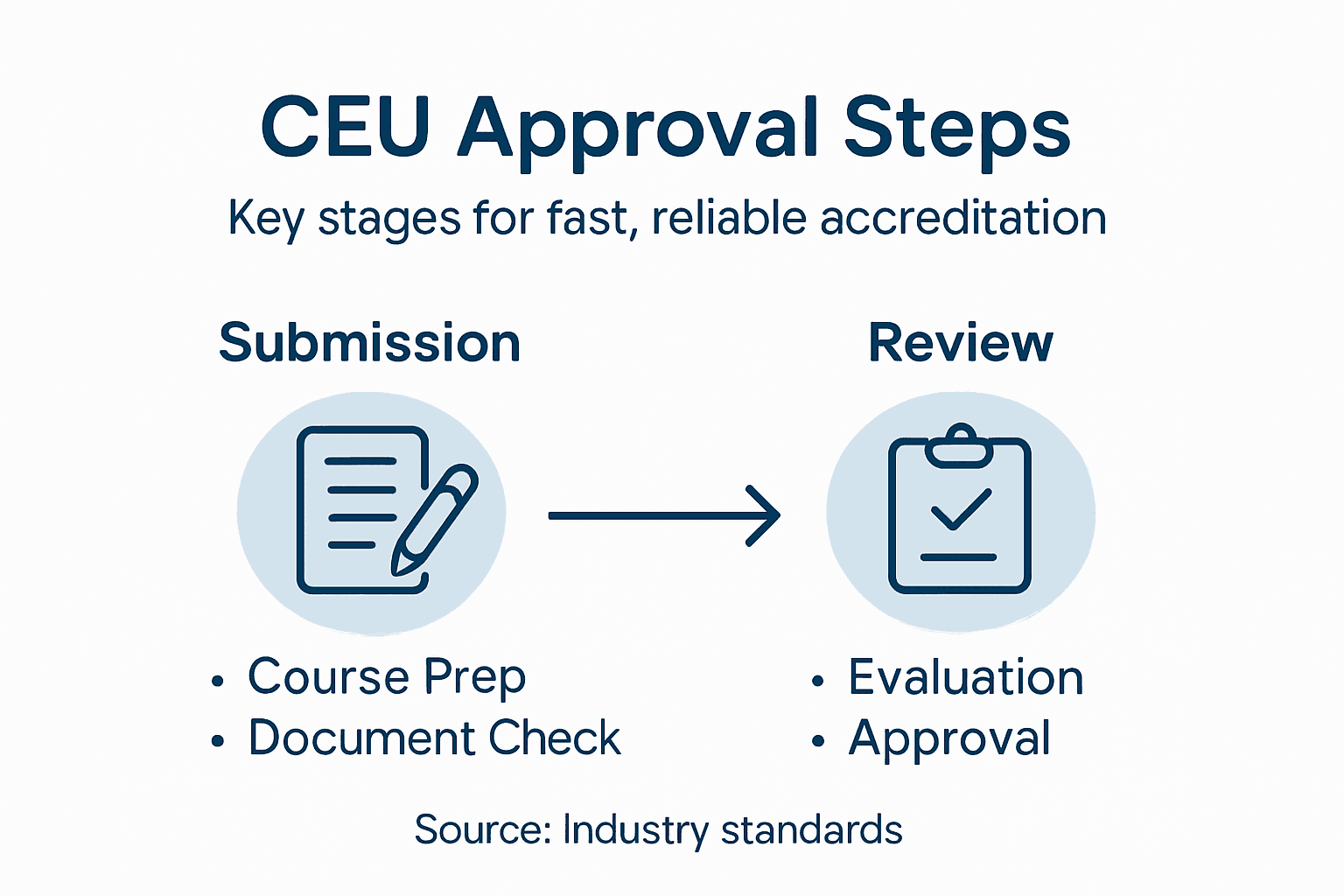
The submission workflow typically encompasses several critical stages:
- Provider Registration: Complete official provider application
- Course Proposal Development: Craft detailed course outline
- Documentation Compilation: Gather supporting materials
- Conflict of Interest Review: Disclose potential conflicts
- Content Evaluation: Ensure non-proprietary, educational focus
Key documentation requirements for a successful submission include:
- Detailed course description
- Learning objective statements
- Instructor credential verification
- Comprehensive curriculum materials
- Assessment and evaluation mechanisms
- Promotional content review
Professionals must anticipate the need for potential revisions and proactive communication with accrediting bodies. This approach helps streamline the approval process and reduces potential delays in course certification.
Meticulous preparation and transparent documentation are the cornerstones of a successful CEU submission workflow.
Pro tip: Develop a comprehensive checklist of submission requirements before beginning your documentation to ensure no critical elements are overlooked.

Common Pitfalls and How to Avoid Rejection
Navigating the complex landscape of CEU approvals requires strategic understanding of common accreditation mistakes that can derail your submission. Professional providers must be vigilant about potential errors that can lead to immediate rejection or significant delays in the approval process.
The most critical areas where providers frequently stumble include:
- Documentation Completeness: Submitting incomplete or inaccurate paperwork
- Objective Clarity: Failing to articulate precise learning outcomes
- Content Restrictions: Including proprietary or overly promotional materials
- Assessment Weakness: Inadequate evaluation and tracking mechanisms
- Deadline Management: Submitting applications too close to review periods
Specific rejection risks often stem from technical submission errors:
- Incomplete application forms
- Missing supplemental documentation
- Unclear program objectives
- Incorrect course title specifications
- Lack of comprehensive instructor credentials
Professionals must meticulously prepare vendor submission guidelines to minimize potential roadblocks. Proactive preparation and thorough review can dramatically improve approval chances.
Precision in documentation is the difference between swift approval and frustrating rejection.
Pro tip: Create a comprehensive checklist that cross-references accreditation requirements before final submission to catch potential errors early in the process.
Compliance, Fees, and First-Pass Approval Strategies
Understanding the financial and regulatory landscape of CEU approvals is critical for professionals seeking efficient accreditation. CEU provider compliance requirements involve navigating a complex ecosystem of fees, documentation standards, and strategic submission approaches that can significantly impact approval timelines.
Critical fee structures and compliance considerations include:
- Annual Registration Fees: Mandatory provider enrollment costs
- Per-Course Submission Fees: Charges for individual course reviews
- Content Relevance Requirements: Ensuring non-proprietary educational materials
- Administrative Review Expenses: Costs associated with detailed application evaluation
- Potential Revision Charges: Additional fees for resubmission or modification
Key financial aspects of the approval process encompass:
- Initial provider registration fee (up to $150)
- First-year CEU authorization costs
- Additional application fees for subsequent courses
- Potential revision and resubmission expenses
- Ongoing compliance maintenance charges
Professionals can maximize their first-pass approval chances by meticulously preparing comprehensive documentation and anticipating potential review challenges before submission.
The following table summarizes first-pass approval strategies and their benefits:
| Strategy | Benefit | Impact on Approval |
|---|---|---|
| Pre-submission checklist | Catches missing elements early | Faster approval |
| Instructor credential review | Ensures recognized expertise | Reduces rejection |
| Budget for revisions | Prevents delay from extra fees | Smooth process |
| Ongoing standards monitoring | Maintains compliance for renewals | Sustained status |
Strategic preparation can transform the CEU approval process from a financial burden to a streamlined professional development investment.
Pro tip: Budget for potential revision costs and maintain a comprehensive documentation checklist to minimize unexpected expenses during the CEU approval process.
Accelerate Your CEU Approval with Expert Strategies and Guaranteed Success
The CEU approval process can seem overwhelming and time-consuming, especially when navigating complex documentation and stringent accreditation criteria like those set by IDCEC. If you are grappling with frequent delays, compliance challenges, or risk costly rejections, aligning with proven expertise is crucial. This article highlights the importance of a systematic approach to CEU approval—one that ensures rigorous documentation, clear learning objectives, and first-pass accreditation success.
At CEU Builder, we understand these pain points deeply. Our specialized services focus on transforming continuing education creation from a bureaucratic hurdle into a reliable, strategic asset. With a perfect 100% first-pass IDCEC accreditation rate, your courses will gain approval fast without wasting months or resources. Whether you choose our full-service done-for-you model or leverage our cutting-edge platform designed for internal teams, you gain:
- Strategic compliance and accreditation guidance tailored to your product and industry
- Streamlined submission workflows that save time and reduce costly revisions
- Educational content designed to engage architects and designers effectively
Discover how to overcome the hurdles described in the article through expert-driven processes and technology. Learn more about our end-to-end solutions in Compliance & Accreditation – CEU Builder and broaden your understanding of industry positioning via Marketplaces & Distribution – CEU Builder.
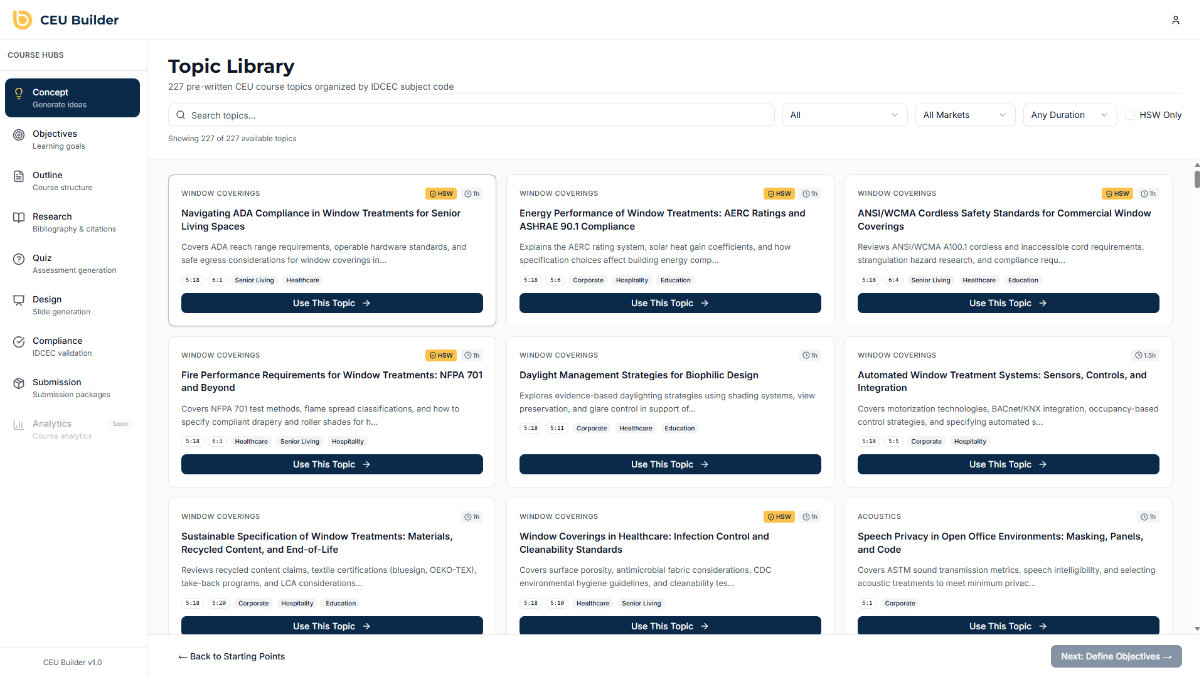
Ready to secure fast, reliable CEU approvals that enhance your brand credibility and drive meaningful engagement? Visit CEU Builder today to explore how our proven methodology can help you navigate the CEU approval process with confidence. Contact us now to accelerate your education strategy and leave accreditation delays behind.
Frequently Asked Questions
What is the CEU approval process?
The CEU approval process is a systematic method used by professional organizations to evaluate and validate continuing education programs, ensuring they meet high-quality standards for professional development and regulatory compliance.
What are the eligibility criteria for IDCEC approval?
To qualify for IDCEC approval, courses must contain non-proprietary content, focus on professional development, meet health and safety standards, have qualified instructors, and include comprehensive documentation of course materials and assessments.
What are some common pitfalls to avoid during the CEU approval process?
Common pitfalls include submitting incomplete documentation, unclear learning objectives, including proprietary materials, weak assessment mechanisms, and mismanagement of deadlines that can lead to rejection or delays.
How can I maximize my chances of first-pass approval for CEUs?
To maximize first-pass approval chances, ensure meticulous preparation of comprehensive documentation, use a pre-submission checklist, verify instructor credentials, budget for potential revision costs, and stay informed about ongoing regulatory standards.
Recommended
- Accreditation Management: Fast-Tracking CEU Delivery
- Master the Course Accreditation Process for CEU Providers
- Step by Step Accreditation Guide for IDCEC Providers
- Course Credentialing: Empowering Education Providers
- Migliori servizi certificazione ISO 27001 – Compare 2025 – Security Hub
- INUSUAL | Top 7 Certificaciones en Liderazgo – Comparativa 2025
