

Accreditation Management: Maximizing ROI for Manufacturers

Most American building product manufacturers spend as much as $120,000 each year on legacy continuing education platforms that limit control and inflate costs. For those overseeing marketing and training, the pressure to meet IDCEC standards while lowering expenses and reclaiming valuable learner data is at an all-time high. This guide reveals proven accreditation management principles that help manufacturers efficiently secure provider status, safeguard their data, and make every dollar count in their CEU programs.
Table of Contents
- Accreditation Management Principles Explained
- Types of Accreditation for CEU Providers
- IDCEC and AIA Provider Registration Requirements
- Building Compliant CEU Courses Efficiently
- Financial Impacts and Data Ownership Strategies
- Comparing Provider Ownership With Legacy Platforms
Key Takeaways
| Point | Details |
|---|---|
| Understanding Accreditation | Accreditation is a continuous process that ensures educational programs meet quality standards and requires ongoing dedication to improvement. |
| Types of CEU Providers | Familiarize yourself with different CEU provider types—Individual, Corporate, and Preferred—to align with specific accreditation standards. |
| Navigating Registration Requirements | Becoming accredited with IDCEC and AIA involves thorough documentation and adherence to specific compliance standards, requiring a strategic approach. |
| Data Ownership Benefits | Control over learner data provides significant strategic advantages, allowing manufacturers to enhance marketing strategies and measure educational impact effectively. |
Accreditation Management Principles Explained
Accreditation serves as a critical quality assurance mechanism for manufacturers seeking to validate their educational programs and professional standards. At its core, accreditation represents a comprehensive evaluation process designed to ensure institutions and programs meet predetermined quality benchmarks. Complex external validation procedures involve rigorous assessment of institutional effectiveness, accountability, and continuous improvement.
The fundamental principles of accreditation management center on transparency, systematic evaluation, and maintaining high professional standards. Manufacturers must understand that accreditation is not a one-time achievement but an ongoing commitment to quality. Key components include comprehensive documentation, periodic reviews, adherence to established criteria, and demonstrating measurable outcomes that reflect institutional excellence.
For building product manufacturers specifically, accreditation in continuing education requires a strategic approach. This involves developing courses that meet Interior Design Continuing Education Council (IDCEC) standards, ensuring Health Safety Welfare (HSW) compliance, and creating content that provides genuine professional value. Multidimensional quality assessment processes help manufacturers align their educational offerings with industry expectations and regulatory requirements.
Pro Tip: Document every aspect of your course development process meticulously, as comprehensive record-keeping is crucial for successful accreditation and future audits.
Types of Accreditation for CEU Providers
Continuing Education Unit (CEU) providers operate within a complex landscape of accreditation types, each designed to validate educational quality and professional standards. Recognized CEU provider classifications typically include individual providers, corporate providers, and preferred providers, each with distinct characteristics and compliance requirements. These categories help ensure that educational programs meet rigorous standards across different professional domains.
The primary types of CEU accreditation can be broadly categorized based on the certifying authority and organizational structure. Individual Providers are typically independent professionals or consultants who develop and deliver specialized training programs. Corporate Providers represent organizations that create internal training and professional development curricula, often specific to their industry or operational needs. Preferred Providers enjoy a higher status, having demonstrated consistent excellence and meeting advanced qualification criteria set by professional bodies like the Interior Design Continuing Education Council (IDCEC).
For building product manufacturers seeking IDCEC accreditation, understanding these provider types is crucial. Accreditation sources encompass diverse educational entities, including regionally accredited universities, state-approved programs, and specialized training organizations. Manufacturers must carefully navigate these classifications, ensuring their continuing education programs meet the specific requirements of professional bodies like IDCEC, which demand high standards of instructional design, content relevance, and professional value.
Pro Tip: Conduct a comprehensive audit of your current educational resources to determine which accreditation provider type best aligns with your organization’s professional development goals and industry standards.
Here’s a comparison of primary CEU provider types and their business implications:
| Provider Type | Key Characteristics | Typical Compliance Focus | Strategic Benefit |
|---|---|---|---|
| Individual Provider | Sole professional runs courses | Expertise documentation | Custom learning experience |
| Corporate Provider | In-house training by organizations | Internal process alignment | Professional development path |
| Preferred Provider | Meets advanced professional criteria | Ongoing excellence, high standards | Industry-wide recognition |
IDCEC and AIA Provider Registration Requirements
Becoming an accredited continuing education provider with the Interior Design Continuing Education Council (IDCEC) and the American Institute of Architects (AIA) requires navigating a comprehensive set of registration requirements. IDCEC provider registration involves specific compliance standards that manufacturers must carefully understand and implement. These requirements are designed to ensure high-quality, non-promotional educational content that genuinely advances professional knowledge and skills.
The registration process for both IDCEC and AIA involves multiple critical steps. Providers must choose between three primary provider classifications: Individual Providers, Corporate Providers, and Preferred Providers. Each classification demands unique documentation, including detailed course materials, proof of educational expertise, and commitment to non-proprietary content development. Manufacturers must prepare comprehensive course outlines that demonstrate clear learning objectives, Health Safety Welfare (HSW) compliance, and professional relevance.
Course submission and tracking requirements are particularly rigorous. Providers must utilize official online portals for course submissions, pay annual registration fees, and maintain meticulous records of course attendance and participant evaluations. The AIA and IDCEC require ongoing reporting, periodic course reviews, and a commitment to maintaining educational standards that go beyond mere content creation. Building product manufacturers must view this process as an ongoing commitment to professional development rather than a one-time administrative task.
Pro Tip: Develop a standardized internal process for course documentation and tracking to streamline your IDCEC and AIA provider registration and renewal requirements.
Building Compliant CEU Courses Efficiently
Creating compliant Continuing Education Unit (CEU) courses demands a strategic approach that balances educational quality with regulatory requirements. CEU course development requires a structured workflow that systematically addresses accreditation standards. Building product manufacturers must design courses that go beyond simple information delivery, focusing instead on creating meaningful learning experiences that meet Interior Design Continuing Education Council (IDCEC) and American Institute of Architects (AIA) standards.
The core of efficient course development lies in meticulous planning and alignment with accreditation requirements. Manufacturers should focus on several critical elements: defining clear learning objectives, developing non-promotional content, creating comprehensive assessments, and ensuring Health Safety Welfare (HSW) compliance. Each course must demonstrate educational value that transcends product marketing, presenting technical information through an educational lens that provides genuine professional development for architects and designers.

Strategic course design accelerates accreditation processes by anticipating potential review challenges. This involves creating detailed course outlines, developing robust assessment mechanisms, and preparing documentation that demonstrates educational rigor. Manufacturers can streamline their approach by leveraging learning management systems (LMS) that support automated certification, tracking, and reporting, thus reducing administrative overhead and increasing the likelihood of first-pass approval from accrediting bodies.
Pro Tip: Develop a comprehensive internal checklist that cross-references IDCEC and AIA requirements before submitting any course for review, ensuring every element meets accreditation standards.
Financial Impacts and Data Ownership Strategies
Understanding the financial landscape of continuing education accreditation is crucial for building product manufacturers seeking to maximize return on investment. Accreditation provides strategic financial advantages by reducing operational risks, minimizing potential errors, and creating opportunities for enhanced market positioning. Building product manufacturers can transform continuing education from a cost center into a strategic asset that drives specification and revenue growth.
The economic benefits of data ownership extend far beyond traditional cost savings. Proprietary learner data represents a critical strategic asset that enables manufacturers to track engagement, measure course effectiveness, and directly correlate educational content with specification and sales outcomes. By maintaining full control over participant information, manufacturers can develop targeted marketing strategies, understand specification trends, and demonstrate the tangible value of their continuing education programs to key stakeholders.
Strategic data management enhances business performance by creating transparent, measurable insights into professional development initiatives. Manufacturers should implement robust data collection and analytics systems that not only meet accreditation requirements but also provide actionable intelligence. This approach transforms continuing education from a compliance exercise into a powerful business intelligence tool that can inform product development, marketing strategies, and sales approaches.
Pro Tip: Implement a comprehensive data tracking system that captures detailed learner interactions, allowing you to map educational engagement directly to specification and sales conversion metrics.
Comparing Provider Ownership With Legacy Platforms
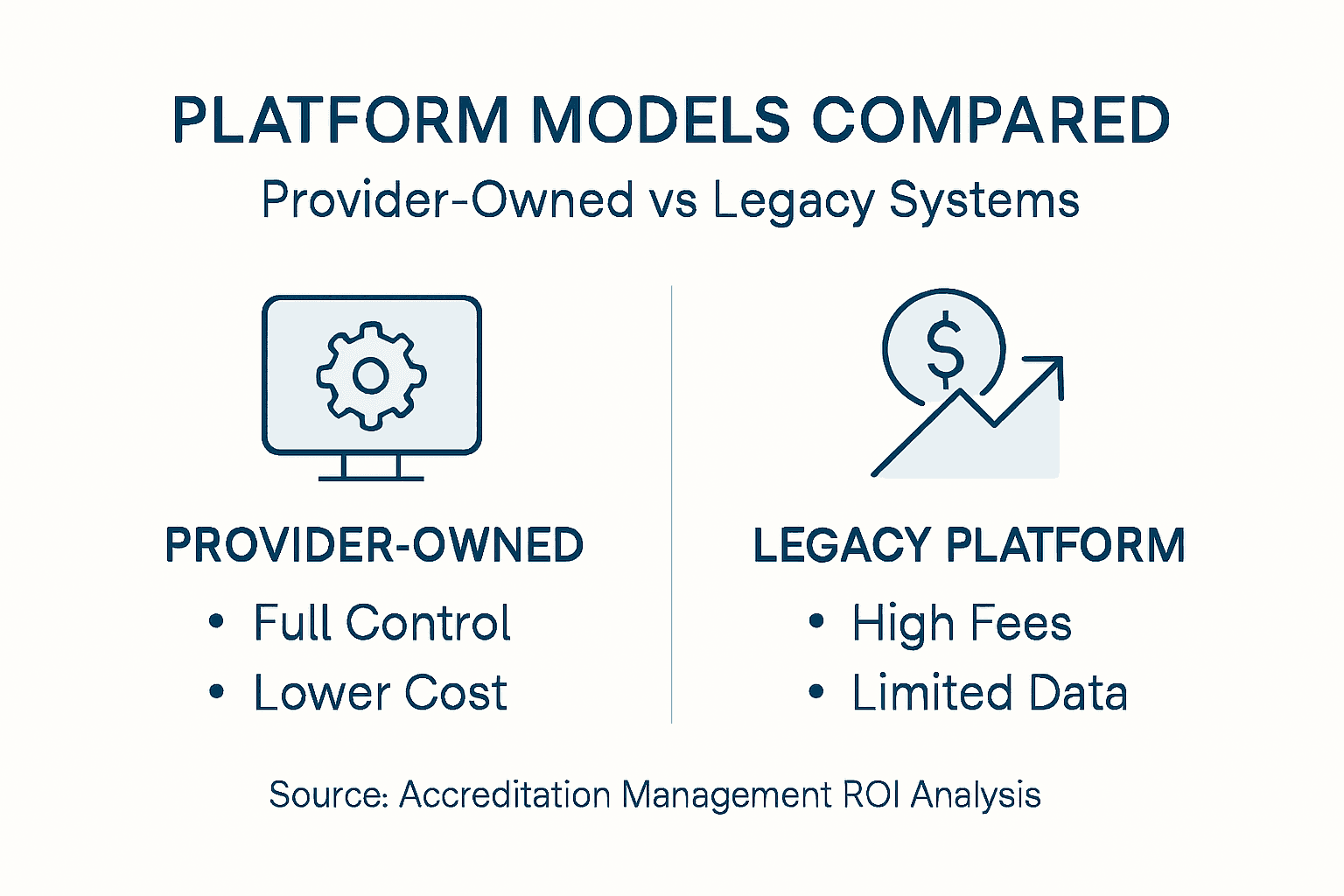
The landscape of continuing education platforms reveals a stark contrast between traditional legacy systems and modern provider ownership models. Legacy platforms consistently impede operational efficiency through outdated architectures that limit manufacturers’ control, flexibility, and data management capabilities. These traditional directories effectively hold manufacturers hostage, charging exorbitant fees while providing minimal transparency and strategic value.
In contrast, the provider ownership model empowers manufacturers to take direct control of their continuing education programs. Traditional platforms like AEC Daily, RedVector, and CEU Events typically charge $50,000 to $120,000 annually, creating complex fee structures that include hidden costs for featured placement, analytics, and email marketing. Modern provider ownership eliminates these barriers, allowing manufacturers to register directly with IDCEC for a one-time $440 fee and leverage technology platforms that provide full data ownership, comprehensive analytics, and significantly reduced ongoing expenses.
Modern platforms support faster innovation cycles by offering cloud-native technologies that enable seamless integrations, real-time reporting, and customizable educational experiences. Manufacturers gain the ability to track learner engagement, correlate course attendance with specification rates, and develop targeted marketing strategies. This approach transforms continuing education from a cost center into a strategic business intelligence tool that directly contributes to revenue generation and market positioning.
Pro Tip: Calculate your total five-year cost of ownership by comparing legacy platform fees against a provider-owned model, including both direct expenses and opportunity costs related to data limitations.
Compare legacy platforms and provider ownership models in continuing education:
| Platform Model | Annual Cost Estimate | Data Ownership Level | Flexibility & Control |
|---|---|---|---|
| Legacy Directory | $50,000–$120,000 | Limited, 3rd-party owned | Low, vendor restrictions |
| Provider Ownership | One-time $440 (IDCEC) | Full, owned by manufacturer | High, direct customization |
Take Full Control of Your Accreditation and Maximize ROI Today
The article clearly shows how relying on legacy CEU platforms can drain your budget and stall your accreditation progress with lengthy timelines and limited data ownership. If you are a building product manufacturer struggling with hidden fees, long course development cycles, and lack of control over your IDCEC and AIA provider status, it is time to switch to a smarter solution. Embracing the provider ownership model means you own your accreditation, learner data, and future without paying six-figure annual fees or waiting over a year to approve your courses.
CEU Builder offers a powerful platform designed to speed up your IDCEC provider registration and course compliance with AI-powered tools that handle HSW checking, subject code assignment, and quiz generation. Our transparent pricing and done-for-you services deliver guaranteed first-pass IDCEC approval and reduce your costs by up to 95% over five years. Discover how to build compliant CEU courses in weeks instead of months and finally track your ROI with full data access.
Ready to leave fees and vendor lock-in behind and take control of your CEU programs?
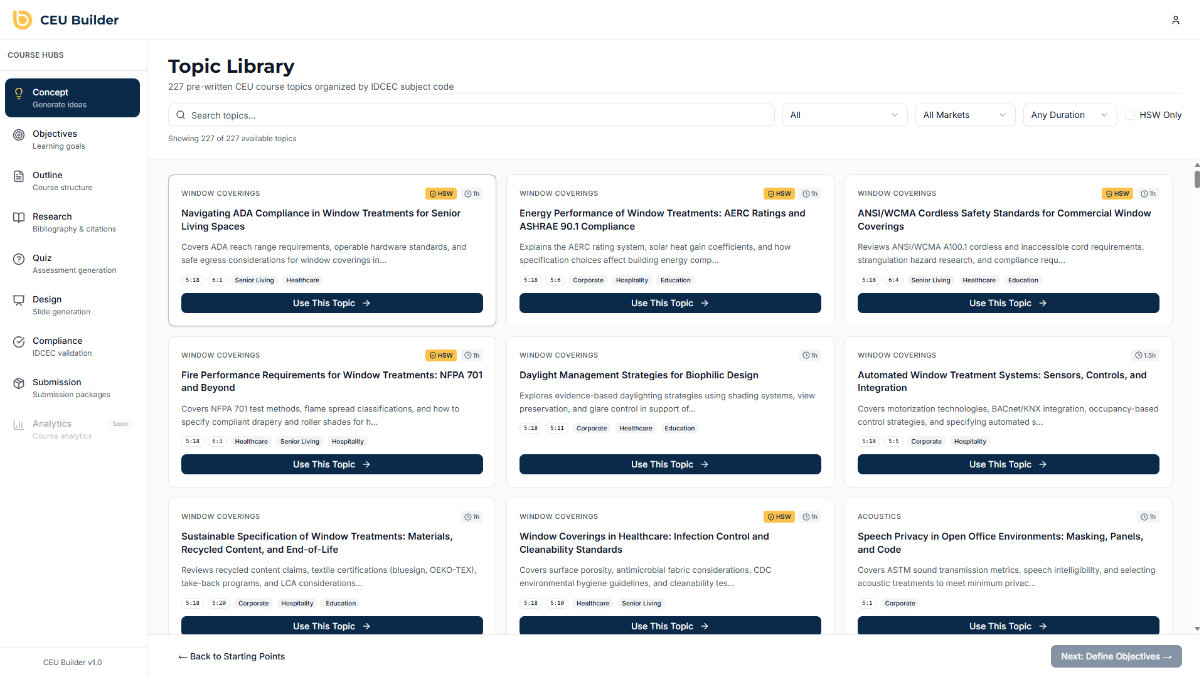
Explore how manufacturers like you are revolutionizing their continuing education programs with CEU Builder. Visit CEU Builder now to learn more about our platform and services. Get started today and own your provider status, data, and profits.
Check out our How to Become an IDCEC Provider guide and see how seamless your accreditation management can be.
Frequently Asked Questions
What is the role of accreditation for manufacturers in continuing education?
Accreditation serves as a quality assurance mechanism, validating that educational programs meet specific industry standards and criteria focused on professional development.
How can manufacturers effectively document their CEU course development process?
Manufacturers should meticulously document every aspect of course preparation, including learning objectives, assessments, and HSW compliance, to facilitate successful accreditation and audits.
What are the different types of CEU providers and their significance?
CEU providers can be categorized as Individual, Corporate, and Preferred Providers. Each type has distinct compliance requirements and strategic benefits, which manufacturers must navigate to ensure their programs meet industry expectations.
Why is data ownership important for manufacturers in continuing education?
Data ownership allows manufacturers to track learner engagement and effectiveness, providing insights that can improve marketing strategies and correlate educational outcomes with business results, ultimately maximizing ROI.
Recommended
- Why Manufacturers Should Be Their Own IDCEC Provider – CEU Builder
- The Real Cost of Working with AEC Daily, RedVector & CEU Events – CEU Builder
- CEU Builder – Stop Paying Six Figures to Be Buried in a Directory
- Industry Insights & Strategy – CEU Builder Blog
- Traceability vs. Transparency: Key Differences in Pet Food
