

Comprehensive Accreditation: Maximizing Impact for Manufacturers
Selecting the right accreditation strategy often feels like a defining decision for North American hospitality manufacturers. As competition grows and design professionals demand higher standards, investing in comprehensive accreditation helps you prove more than compliance. Marketing directors and CEU program coordinators looking to attract architects and drive inventory specification will discover how rigorous accreditation transforms educational programs into trusted business assets that influence real project decisions.
Table of Contents
- What Is Comprehensive Accreditation?
- Types and Approaches to Accreditation
- How the Accreditation Process Works
- Essential Requirements and Key Criteria
- Risks, Costs, and Common Pitfalls
- Benefits for Hospitality Manufacturers
Key Takeaways
| Point | Details |
|---|---|
| Comprehensive Accreditation Ensures Quality | It involves a thorough review process that goes beyond basic compliance, focusing on educational effectiveness and institutional integrity. |
| Multiple Accreditation Approaches Exist | Manufacturers can choose from minimal, content-based, or outcomes-based models, depending on their goals and industry requirements. |
| Rigorous Documentation is Essential | Manufacturers must demonstrate clear learning objectives, curriculum quality, and faculty competence through meticulous documentation. |
| Accreditation Offers Strategic Business Advantages | Achieving accreditation enhances brand reputation, fosters trust with stakeholders, and can lead to market differentiation. |
What Is Comprehensive Accreditation?
Comprehensive accreditation represents a sophisticated validation process where organizations undergo systematic external review to ensure they meet rigorous professional standards. In the context of continuing education for manufacturers, this means a methodical evaluation that goes far beyond basic compliance checks.
At its core, comprehensive accreditation involves a collaborative review process designed to validate institutional quality, integrity, and effectiveness. For manufacturers developing continuing education courses, this translates into a multi-stage assessment that examines:
- Learning content quality
- Instructional design methodology
- Subject matter expertise
- Alignment with professional standards
- Potential impact on professional knowledge
The process typically requires manufacturers to demonstrate several key elements through detailed documentation and self-assessment. These include:
- Rigorous curriculum development
- Expert content validation
- Clear learning objectives
- Measurable educational outcomes
- Ongoing quality improvement mechanisms
Unlike basic certification, comprehensive accreditation frameworks provide a holistic evaluation that considers historical context, current industry standards, and future educational effectiveness. This approach ensures that continuing education programs aren’t just technically compliant, but genuinely valuable for professional development.
To understand the business impact of comprehensive accreditation, consider these feature-to-benefit relationships:
| Accreditation Feature | Business Impact | Stakeholder Advantage |
|---|---|---|
| Rigorous curriculum standards | Enhances brand reputation | Builds trust with clients |
| Continuous improvement cycles | Drives operational efficiency | Supports ongoing professional growth |
| Verified faculty expertise | Increases educational credibility | Attracts industry partners |
Comprehensive accreditation transforms educational content from a checkbox exercise into a strategic business asset that drives professional knowledge and organizational credibility.
Pro tip: Invest time in understanding the specific accreditation requirements for your industry, as nuanced details can significantly impact your educational program’s success and recognition.
Types and Approaches to Accreditation
In the dynamic landscape of professional education, accreditation has evolved to encompass multiple sophisticated approaches designed to validate educational quality and effectiveness. Accreditation models range from minimal compliance checks to comprehensive evaluation frameworks that assess institutional performance from multiple perspectives.
Three primary approaches to accreditation emerge as critical methodologies for manufacturers developing continuing education programs:
- Minimal Model: Focuses on basic regulatory compliance and foundational characteristics
- Content-Based Model: Emphasizes strict adherence to curriculum standards and faculty qualifications
- Outcomes-Based Model: Prioritizes measurable program goals and continuous improvement
Each model offers unique advantages for manufacturers seeking professional recognition. Institutional accreditation processes can operate at local, national, or international levels, providing flexibility for organizations with diverse educational missions.

Here’s a comparison of the three main accreditation approaches and their strategic applications:
| Accreditation Approach | Primary Focus | Best For |
|---|---|---|
| Minimal Model | Basic regulatory adherence | Organizations seeking entry-level recognition |
| Content-Based Model | Curriculum and faculty standards | Manufacturers prioritizing consistent course quality |
| Outcomes-Based Model | Measurable improvements and results | Institutions focused on long-term educational value |
The selection of an appropriate accreditation approach depends on several critical factors:
- Organizational educational goals
- Industry-specific requirements
- Desired level of comprehensive review
- Long-term professional development objectives
- Specific regulatory landscape
Choosing the right accreditation approach is not just about compliance, but about strategically positioning your educational programs for maximum impact and credibility.
Pro tip: Conduct a thorough internal assessment of your educational program’s strengths and weaknesses before selecting an accreditation approach to ensure the most effective validation strategy.
How the Accreditation Process Works
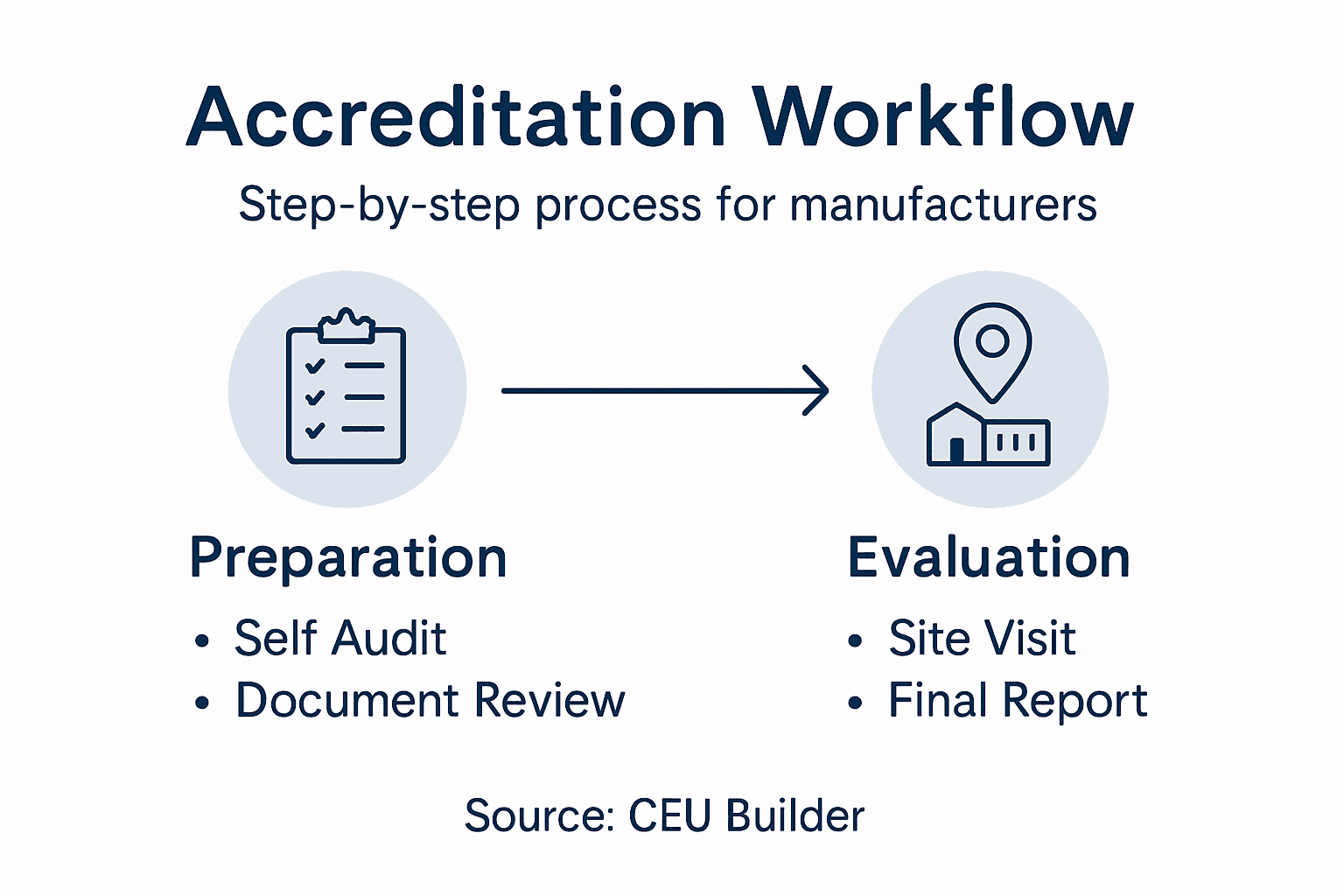
The accreditation journey for manufacturers developing continuing education programs involves a structured, multi-stage process designed to ensure rigorous quality and professional standards. Accreditation processes typically unfold through a comprehensive sequence of strategic evaluations and documentation requirements.
The core stages of the accreditation process include:
- Preliminary Preparation: Establishing institutional goals and eligibility
- Self-Assessment: Conducting internal review and documentation
- Application Submission: Presenting comprehensive program details
- Peer Review: Hosting external expert evaluation
- Final Decision: Receiving accreditation status determination
Manufacturers must navigate several critical components when pursuing professional accreditation:
- Define clear educational objectives
- Develop comprehensive curriculum documentation
- Demonstrate faculty expertise and qualifications
- Establish measurable learning outcomes
- Prepare for potential on-site reviews
The institutional review stages require meticulous attention to detail and a commitment to transparency. Accrediting bodies examine not just current performance, but an organization’s capacity for continuous improvement and educational excellence.
Successful accreditation is less about passing a one-time review and more about embedding a culture of ongoing quality and professional development.
Pro tip: Develop a comprehensive documentation strategy well in advance of your accreditation application, maintaining systematic records that demonstrate your program’s consistent commitment to educational quality.
Essential Requirements and Key Criteria
Comprehensive accreditation demands manufacturers meet a rigorous set of essential requirements that demonstrate institutional quality and educational effectiveness. Key accreditation standards encompass multiple critical dimensions beyond simple compliance checks.
The fundamental criteria manufacturers must address include:
- Organizational Alignment: Clear mission and strategic educational objectives
- Curriculum Quality: Robust, professionally relevant educational content
- Faculty Competence: Demonstrated expertise and professional credentials
- Resource Adequacy: Sufficient infrastructure to support educational programs
- Continuous Improvement: Systematic mechanisms for ongoing quality enhancement
Manufacturers pursuing accreditation must systematically document and validate several core components:
- Institutional mission statement
- Detailed curriculum design framework
- Faculty qualification documentation
- Learning outcome assessment mechanisms
- Quality assurance and improvement protocols
The comprehensive accreditation requirements extend beyond basic administrative compliance. Accrediting bodies evaluate an organization’s commitment to educational excellence, professional development, and sustained institutional effectiveness.
Successful accreditation is not a destination, but a continuous journey of institutional growth, learning, and professional commitment.
Pro tip: Develop a comprehensive documentation strategy that goes beyond mere compliance, focusing on demonstrating genuine educational value and institutional integrity.
Risks, Costs, and Common Pitfalls
Navigating the accreditation landscape presents manufacturers with a complex array of potential challenges that can significantly impact their educational program’s success. Accreditation pitfalls often emerge from subtle yet critical oversights that can derail even well-intentioned efforts.
The most prevalent risks and challenges include:
- Documentation Gaps: Incomplete or inadequate record-keeping
- Qualification Verification: Insufficient faculty credential documentation
- Learning Outcome Measurement: Weak assessment methodologies
- Compliance Alignment: Misunderstanding accreditation standards
- Resource Constraints: Limited financial and operational capacity
Manufacturers must be particularly vigilant about avoiding these critical mistakes:
- Underestimating documentation requirements
- Neglecting ongoing quality improvement processes
- Failing to align curriculum with professional standards
- Overlooking stakeholder engagement
- Inadequate preparation for external reviews
The comprehensive accreditation challenges extend beyond mere financial investments. Smaller organizations frequently encounter operational burdens that can overwhelm internal resources and create significant administrative complexity.
The path to successful accreditation is not about perfection, but about demonstrating a genuine commitment to continuous improvement and educational excellence.
Pro tip: Develop a dedicated cross-functional team with clear responsibilities for managing the accreditation process, ensuring comprehensive preparation and reducing organizational stress.
Benefits for Hospitality Manufacturers
Continuing education accreditation offers hospitality manufacturers a strategic pathway to differentiate themselves in a competitive market landscape. Hospitality accreditation benefits extend far beyond simple compliance, providing a robust framework for building organizational credibility and market positioning.
The key advantages for manufacturers include:
- Market Differentiation: Standing out from competitors through recognized educational credentials
- Credibility Enhancement: Establishing trust with architects and design professionals
- Specification Influence: Increasing likelihood of product selection in design projects
- Thought Leadership: Positioning as an industry expert and knowledge resource
- Professional Network Expansion: Creating connections with design decision-makers
Manufacturers can expect multiple strategic benefits from comprehensive accreditation:
- Increased customer confidence
- Higher perceived product value
- More meaningful engagement with design professionals
- Enhanced brand reputation
- Potential price premium for certified products
Sustainable certification strategies also unlock additional advantages, particularly for manufacturers focused on environmental and operational excellence. Certified companies frequently see improved operational efficiency and enhanced guest loyalty through demonstrated commitment to quality standards.
Accreditation transforms educational content from a compliance requirement into a powerful strategic asset that drives business growth and professional recognition.
Pro tip: Develop a strategic narrative around your accreditation that connects your educational offerings directly to tangible design solutions and professional development opportunities.
Unlock the Full Potential of Comprehensive Accreditation for Your Manufacturing Business
Comprehensive accreditation requires precision, strategic planning, and deep expertise to transform educational content into a powerful business asset. If your organization struggles with complex accreditation requirements, documentation gaps, or aligning your curriculum to professional standards, you are not alone. The key challenge is moving beyond compliance to build accredited continuing education that enhances brand credibility and drives specifications from architects and designers.
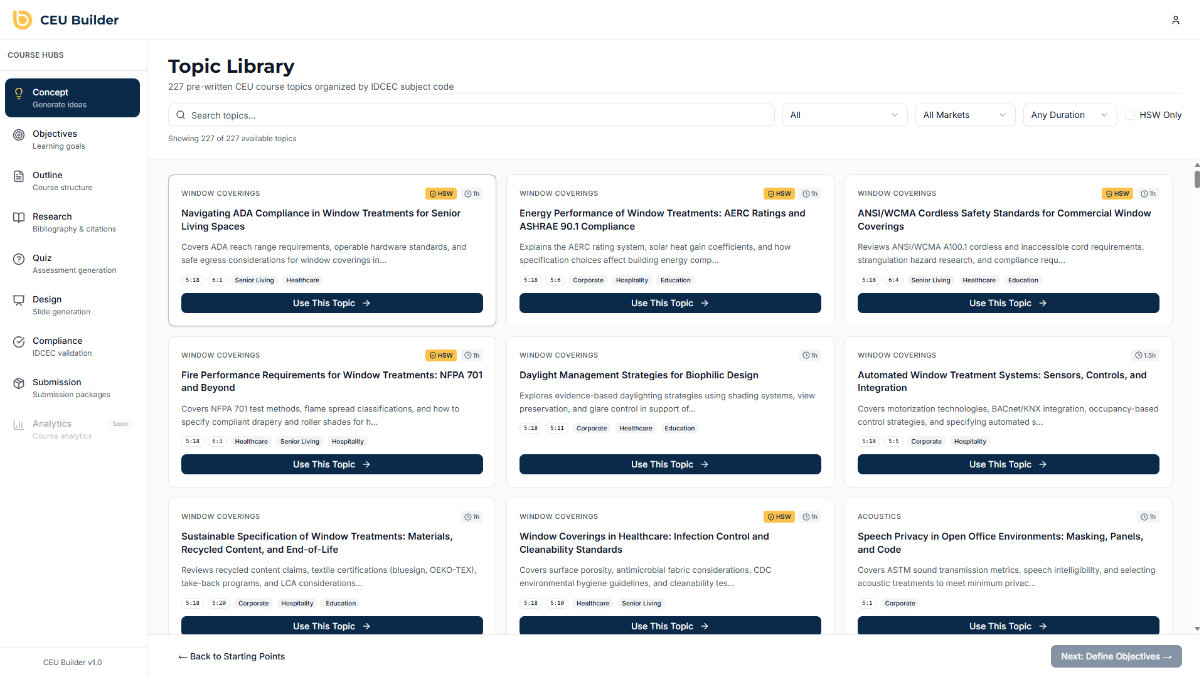
At CEU Builder, we specialize in helping hospitality manufacturers navigate the intricate accreditation landscape with confidence. Our solutions address critical pain points such as curriculum design, measurable learning outcomes, and seamless IDCEC submission management. With a 100% first-pass accreditation rate, we remove the risk of costly delays and rejections while accelerating your time to market. Whether you seek a fully managed done-for-you service or a robust platform for your internal team, CEU Builder leverages proven methodologies and cutting-edge tools to make accreditation a strategic advantage rather than a bureaucratic burden.
Explore how our Compliance & Accreditation – CEU Builder services can streamline your journey and ensure your continuing education programs meet the highest standards. For practical insights on crafting effective educational strategies aligned with industry needs, visit CEU Strategy & Best Practices – CEU Builder. Ready to transform your continuing education approach and maximize your market impact? Learn more about our tailored solutions at CEU Builder.
Take control of your accreditation process today and position your manufacturing brand as a trusted industry leader through accredited continuing education. Visit https://ceubuilder.net/ to get started and gain a competitive edge in the hospitality market.
Frequently Asked Questions
What is comprehensive accreditation?
Comprehensive accreditation is a validation process where organizations undergo external reviews to ensure they meet high professional standards, especially in continuing education for manufacturers. It assesses curriculum quality, instructional design, and overall effectiveness.
Why is comprehensive accreditation important for manufacturers?
Comprehensive accreditation enhances brand reputation, builds trust with clients, and ensures educational programs are genuinely valuable for professional development, rather than just meeting compliance requirements.
What are the main approaches to accreditation?
The three main approaches to accreditation are: Minimal Model, which focuses on basic compliance; Content-Based Model, which emphasizes curriculum and faculty qualifications; and Outcomes-Based Model, which prioritizes measurable results and continuous improvement.
What are the risks and common pitfalls in the accreditation process?
Common risks include documentation gaps, inadequate faculty qualification verification, weak assessment methodologies, and misunderstanding of accreditation standards. Manufacturers should be vigilant to avoid these mistakes to successfully achieve accreditation.
Recommended
